SYDNY
SYDNEY
HomeInvestigationEnsayo CPT (Cone Penetration Test)

CPT (Cone Penetration Test) in Sydney

Rigorous testing. Clear reporting.

LEARN MORE

The CPT rig we mobilise across Sydney is a 20-tonne truck-mounted unit that pushes a 35.7 mm diameter cone at a steady 20 mm/s, recording tip resistance, sleeve friction, and pore pressure in real time. From the Hawkesbury Sandstone ridges in the north to the Botany Bay alluvial flats in the south, the cone's continuous profile reveals stratigraphy that conventional drilling often misses. For projects requiring undisturbed samples alongside the electronic log, we combine the CPT with calicatas exploratorias to verify soil classification at critical depths. The data acquisition system samples every 10 mm, giving engineers a high-resolution picture of the ground before they design a single footing.
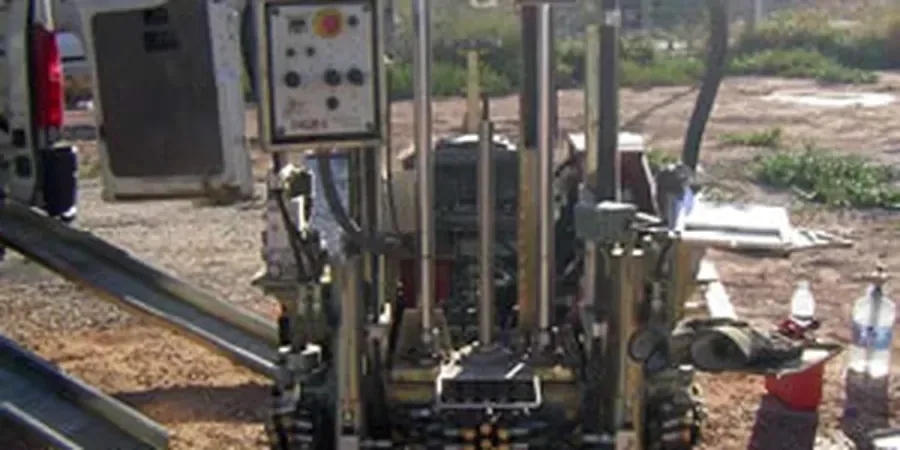
Illustrative image of CPT (Cone Penetration Test) in Sydney
A single CPT push in Sydney's alluvial basins can replace three or four SPT boreholes, delivering continuous stratigraphy without the disturbance of hammer-driven sampling.

Our service areas

Scope of work

Every CPT run in Sydney follows AS 1726-2017, which mandates corrections for pore pressure effects on the cone resistance when testing in soft clays and silts — a common condition along the Parramatta River corridor. The standard also requires temperature stabilisation of the load cells before deployment, a step our technicians never skip. We process the raw traces through software that applies the Campanella and Robertson correction factors, then classify the soil behaviour type (SBT) using the Ic index. When the project involves deep foundations or cut-and-cover tunnels, we supplement the cone data with a dilatometer test to obtain lateral stress and modulus values, and with MASW-Vs30 surveys to estimate shear wave velocity profiles for dynamic analysis. The combined dataset gives geotechnical teams confidence in the design parameters they adopt.
Technical reference — Sydney

Area-specific notes

One thing we frequently observe in Sydney's eastern suburbs is the presence of thin sand lenses within the Botany Sands aquifer that the cone penetrates without any visible change on the qc trace, yet they cause sudden pore pressure drops that mislead fine-grained soil classification. If the operator relies solely on uncorrected readings, the interpreted SBT profile may classify a silty sand as a lean clay, which then leads to overestimated undrained shear strengths. The risk is real: we have seen footing designs based on such profiles where post-construction settlements exceeded 50 mm. That is why we always apply the u2 correction and run dissipation tests at every 1.5 m in these shallow aquifers.

Need a geotechnical assessment?

Reply within 24h.

Email: contact@geotechnicalengineering1.co

Standards used

AS 1726-2017 – Geotechnical site investigations (CPT procedure and reporting), ISO 22476-1:2012 – Cone and piezocone penetration tests, AS 1289.6.5.1 – Standard test method for electronic friction cone and piezocone

Technical parameters

ParameterTypical value
Cone tip resistance (qc)Measured in MPa; typical range 0.5–40 MPa
Sleeve friction (fs)Measured in kPa; friction ratio Rf = fs/qc × 100%
Pore pressure (u2)Measured behind cone; dissipation tests for kh
Penetration rate20 mm/s ± 5 mm/s per ISO 22476-1
Depth capacityUp to 30 m in soft soils; 20 m in stiff clays
Temperature rangeOperates 5 °C to 45 °C; sensors stabilised before testing

Quick answers

How deep can a CPT test go in Sydney's typical soil profiles?

In the soft clays of the Parramatta River valley, we regularly reach 30 m depth. In the stiff residual clays of the Hornsby Plateau, refusal often occurs between 15 m and 20 m when the cone encounters partially weathered shale.

What is the difference between CPT and SPT for Sydney projects?

The CPT provides a continuous profile of tip resistance and sleeve friction, whereas the SPT gives discrete blow counts at 1.5 m intervals. For liquefaction assessment in Botany Sands, the CPT's continuous trace is preferred because it captures thin loose layers that SPT might miss entirely.

How much does a CPT test cost in Sydney?

A standard CPT push to 20 m depth typically costs between AU$270 and AU$450, depending on site access, mobilisation distance, and the number of dissipation tests required. Volume discounts apply for projects with multiple test locations.

Can CPT data be used for foundation design in Sydney's reactive clays?

Yes, the cone's sleeve friction and pore pressure measurements help estimate the overconsolidation ratio (OCR) and undrained shear strength of the Bringelly Shale-derived clays. However, for reactive clay site classification under AS 2870, we recommend combining CPT with laboratory shrinkage index tests.

Location and service area

We serve projects across Sydney and its metropolitan area.

View larger map