SYDNY
SYDNEY
HomeFoundationsDifferential Settlement Analysis

Differential Settlement Analysis in Sydney

Rigorous testing. Clear reporting.

LEARN MORE

Sydney's coastal humidity and cyclic rainfall drive shrink-swell cycles in the Ashfield Shale and Botany Sands, which directly cause differential movement under slab-on-grade foundations. When clay layers beneath a footing lose moisture during a dry summer, the edge of a house can settle twice as fast as the center — we measure that differential using precise survey arrays and settlement plates. Before we mobilize, we cross-check the local groundwater regime with a permeability test to rule out seepage-driven consolidation. The result is a contour map of predicted vertical displacement across the site, not just a single number.
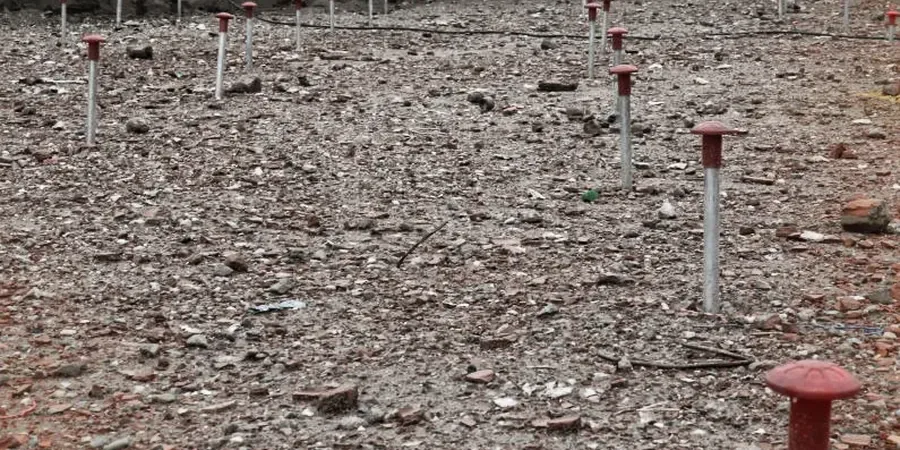
Illustrative image of Differential settlement analysis in Sydney
In Sydney's reclaimed wetlands, differential settlement can exceed 50 mm across a single row of footings — enough to shear a brick veneer wall in two years.


Our service areas

Scope of work

Sydney's post-war suburban expansion pushed developments onto former creek beds and tidal wetlands, where uncontrolled fill sits above soft alluvium. That legacy means many 1960s homes in Canterbury-Bankstown now show diagonal cracks above doors — classic differential settlement patterns. Our analysis begins with a detailed borehole program targeting each distinct stratum; we correlate SPT blow counts with oedometer data from undisturbed tube samples. Where the site transitions from sandstone bedrock to reclaimed swamp, we apply a staged loading model and verify it with a plate load test at each footing location. This step-by-step approach isolates which layer is causing the movement.
Technical reference — Sydney

Area-specific notes

In Sydney, many times we see owners patch cracks before a property sale without addressing the ongoing differential movement beneath the slab. That patchwork hides lean of the structure: the downpipe on the low side starts pulling away from the wall, and within two wet winters the crack reappears wider. The real risk is not just aesthetic — when differential settlement exceeds 1/300 of the span, door frames rack, windows jam, and the roof trusses can redistribute load unpredictably. We flag this early by comparing survey data from consecutive seasons rather than relying on a single snapshot.

Need a geotechnical assessment?

Reply within 24h.

Email: contact@geotechnicalengineering1.co

Standards used

AS 2870-2011 (Residential slabs and footings), AS 4678-2002 (Earth retaining structures, settlement criteria), AS 1726-2017 (Geotechnical site investigations)

Technical parameters

ParameterTypical value
Maximum differential settlement25–50 mm (typical limit for brick veneer)
Monitoring duration6–18 months depending on soil creep rate
Minimum number of settlement points6 per structure (corners + mid-span)
Survey accuracy+/- 0.5 mm using digital level
Soil types analyzedSoft clay, loose sand, uncontrolled fill, residual shale
Load increments15–40 kPa per floor for residential; up to 150 kPa for warehouses

Quick answers

How much does differential settlement analysis cost in Sydney?

For a typical single-story house with four boreholes and six months of monitoring, the cost ranges from AU$1,010 to AU$2,790. Larger commercial sites with multiple structures can reach AU$6,500 depending on the number of survey points and laboratory tests required.

What is the difference between total settlement and differential settlement?

Total settlement is the entire vertical movement of a foundation. Differential settlement is the uneven movement between two points on the same structure — the gap that causes cracking. In Sydney's clay soils, differential movement often exceeds total settlement because one edge of a building sits on fill while the other is on rock.

How long does the monitoring phase typically take?

We recommend at least one full wet-dry cycle, which in Sydney means 9 to 15 months. If the site has deep fill layers (>5 m), we extend monitoring to 18 months to capture secondary creep behavior. Shorter programs risk missing the worst-case seasonal movement.

Can I sell my house while it has active differential settlement monitoring?

Yes, and it can actually help the sale. A property with a documented settlement trend and a mitigation plan is more transparent to buyers than one with hidden patches. We provide a transferable monitoring report that shows the movement rate has stabilized or is within AS 2870 limits.

Location and service area

We serve projects across Sydney and its metropolitan area.

View larger map