SYDNY
SYDNEY
HomeRoadwayRoad Subgrade Design Sydney

Road Subgrade Design Sydney

Rigorous testing. Clear reporting.

LEARN MORE

Road subgrade design in Sydney relies on precise geotechnical investigation using dynamic cone penetrometers and falling weight deflectometers. Our field team operates out of a mobile lab equipped to perform in-situ CBR tests and compaction control across Sydney's diverse terrain, from the Hawkesbury Sandstone ridges to the alluvial flats along the Parramatta River. Before any pavement layer is placed, the subgrade must be tested for bearing capacity and moisture sensitivity. For sites with variable fill or soft clay, we combine the subgrade study with a georradar survey to map buried anomalies, then run plate load tests on compacted layers to verify modulus values directly on site.
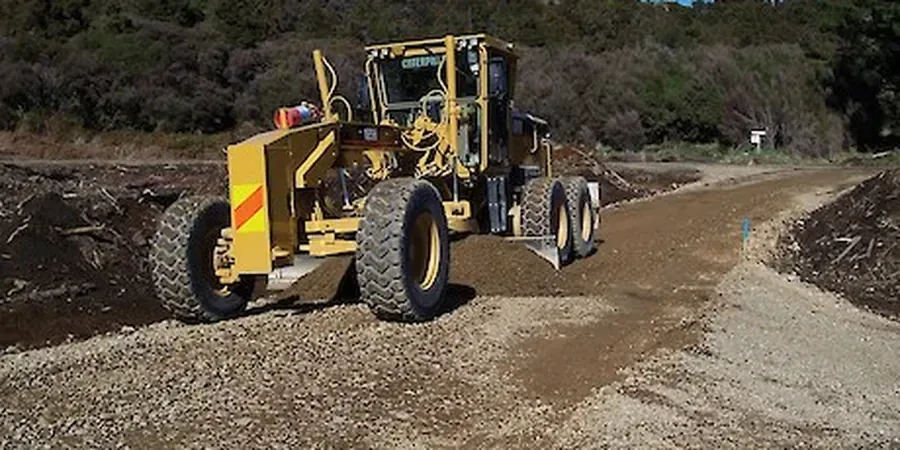
Illustrative image of Road subgrade design in Sydney
Subgrade CBR variability in Sydney's western clay belts can exceed 50% over 50 metres, demanding site-specific testing rather than reliance on regional maps.

Our service areas

Scope of work

Sydney's humid subtropical climate drives seasonal moisture changes that affect subgrade stiffness and CBR values, particularly in the western suburbs built on residual clay soils. Our design methodology accounts for this by modelling worst-case saturation scenarios following AS 1726 and the Austroads Pavement Design Guide. CBR testing is performed on both soaked and unsoaked samples, and we correlate results with DCP penetration rates to confirm uniformity. For projects on reactive clay profiles, we recommend suelos expansivos treatment to control volume change, and for deep fills we incorporate consolidation settlement analysis before final pavement design. All results are certified under our NATA-accredited quality system.
Technical reference — Sydney

Area-specific notes

Subgrade failure in Sydney is most common on the heavy clay profiles of the Bringelly Shale formation, where seasonal shrinkage and swelling can crack a pavement within two years. In contrast, the sandy colluvium of the northern beaches often erodes under surface runoff, leading to localised loss of support. A proper subgrade study identifies these risks early, distinguishing between low-risk Hawkesbury sandstone sites and high-risk clay zones in areas like Penrith or Campbelltown.

Need a geotechnical assessment?

Reply within 24h.

Email: contact@geotechnicalengineering1.co

Standards used

AS 1289.5.4.1 (compaction control), AS 1289.6.1.1 (CBR laboratory method), Austroads Guide to Pavement Technology Part 2 (pavement structural design)

Technical parameters

ParameterTypical value
Design CBR value3% - 15% (site-specific)
Subgrade modulus (Mr)30 - 120 MPa (back-calculated)
Maximum dry density (MDD)1.6 - 2.1 t/m³ (AS 1289.5.1.1)
Optimum moisture content (OMC)9% - 22%
Swelling potential (reactive clays)Low to very high (AS 2870 classification)

Quick answers

What is the typical CBR value for subgrade in Sydney?

CBR values in Sydney vary widely depending on geology. Hawkesbury Sandstone sites often yield CBR 10-15%, while Bringelly Shale clays can drop to 2-5% when saturated. All designs should be based on site-specific soaked CBR tests, not regional tables.

How much does a road subgrade design study cost in Sydney?

A standard subgrade investigation including CBR testing, compaction control, and reporting typically ranges between AU$1,390 and AU$5,420 depending on site access, number of test pits, and laboratory work required. Contact us for a quote tailored to your project.

Do I need soaked or unsoaked CBR for pavement design?

For Sydney's climate, soaked CBR is strongly recommended. Seasonal rainfall can saturate subgrade layers, reducing bearing capacity by 40-60%. Soaked CBR simulates worst-case conditions and gives a safer design modulus. Unsoaked CBR may be acceptable only for sealed pavements in arid zones.

Can you design subgrade for roads on reactive clay in western Sydney?

Yes. We have extensive experience on Bringelly Shale and other reactive clay profiles common in Penrith, Campbelltown, and the Hawkesbury region. Our designs incorporate lime or cement stabilisation to reduce swell potential, and we verify performance through repeated CBR and swelling pressure tests.

Location and service area

We serve projects across Sydney and its metropolitan area.

View larger map

Watch how it works