SYDNY
SYDNEY
HomeFoundationsPilotes fricción vs punta (análisis)

Pile Skin Friction vs. End Bearing Analysis in Sydney

Rigorous testing. Clear reporting.

LEARN MORE

In Sydney, the contrast between the stiff Hawkesbury Sandstone bedrock and the overlying Quaternary sands and clays makes pile skin friction vs. end bearing analysis a critical step for any deep foundation design. We frequently see projects where engineers assume full end bearing on rock, only to find that shaft resistance in the upper soil layers dominates the load-settlement curve. A proper analysis distinguishes between these two components, preventing both overdesign and unexpected settlement. Before finalizing pile geometry, we recommend a complementary static load test program to calibrate the skin friction parameters against local conditions.
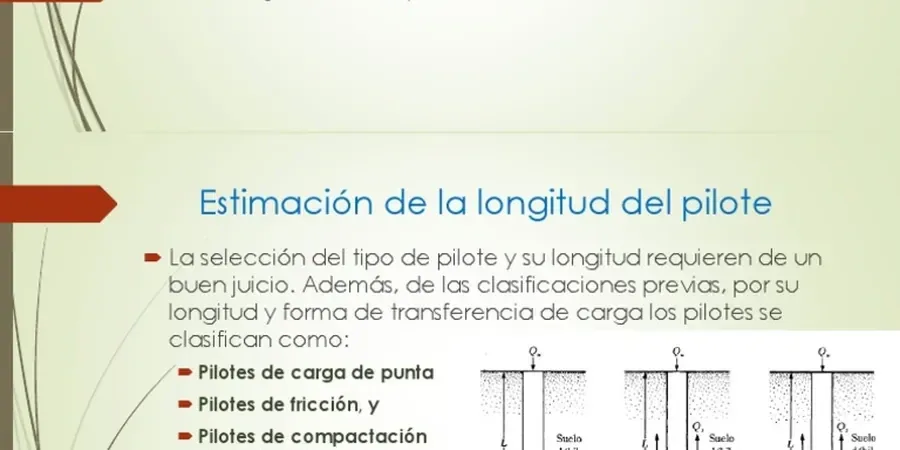
Illustrative image of Pile skin friction vs. end bearing analysis in Sydney
In Sydney sandstone, end bearing often contributes less than 40% of total capacity for large-diameter piles due to high shaft resistance in the upper rock socket.

Our service areas

Scope of work

Sydney's population exceeds 5.3 million, and its urban infill projects often involve piles driven through 10 to 30 meters of alluvial deposits before reaching competent sandstone. Our analysis methodically separates skin friction from end bearing using strain gauge instrumentation along the pile shaft and a telltale system at the toe. The key parameters we evaluate include:
  • Unit shaft resistance in each soil stratum (clay, sand, residual soil)
  • End bearing capacity on Hawkesbury Sandstone (typically 5–15 MPa allowable)
  • Load transfer curves (t-z and q-z) for non-linear settlement prediction
These results feed directly into the design of pile groups and the assessment of differential settlement between adjacent foundations.
Technical reference — Sydney

Area-specific notes

The Hawkesbury Sandstone in Sydney exhibits significant variability in strength and fracture frequency across short distances. A pile toe may encounter a massive, high-Q sandstone in one borehole and a heavily jointed, low-RQD section just 10 meters away. If the analysis assumes uniform end bearing across the site, the result can be a 30% overestimate of toe resistance. Additionally, the shallow groundwater table in coastal suburbs like Botany Bay can reduce effective stress and lower skin friction in sand layers. Ignoring these spatial variations leads to foundation performance that differs markedly from the design assumptions.

Need a geotechnical assessment?

Reply within 24h.

Email: contact@geotechnicalengineering1.co

Standards used

AS 2159:2009 (Piling – Design and Installation), AS 1726:2017 (Geotechnical Site Investigations), AS 1289/D1143M-20 (Deep Foundations Under Static Axial Compressive Load)

Technical parameters

ParameterTypical value
Skin friction (sand)30–80 kPa
Skin friction (clay)15–50 kPa
End bearing (sandstone)5–15 MPa
Pile diameter range0.6–2.0 m
Load test methodStatic (AS 1289)

Quick answers

How do you separate skin friction from end bearing in a pile load test?

The reference range for this service in Sydney is AU$1.830 - AU$4.440. The final price depends on the project scope and volume.

What is the typical skin friction range for sand layers in Sydney?

For clean quartz sands in the Botany Bay area, unit shaft resistance typically falls between 30 and 80 kPa, depending on relative density and effective stress. In the silty sands of the Parramatta River valley, values may drop to 20–50 kPa due to lower friction angles.

When should end bearing analysis be prioritized over skin friction in Sydney?

End bearing becomes dominant when piles are socketed into massive, unfractured Hawkesbury Sandstone with RQD above 90%. In that case, the toe can carry 70–80% of the working load. For piles terminating in residual soil or weathered rock, skin friction usually governs and must be analyzed with greater detail.

How much does a pile skin friction vs. end bearing analysis cost in Sydney?

The typical cost for a complete analysis including instrumentation, field testing, and reporting ranges from AU$1,830 to AU$4,440. The variation depends on pile depth, number of strain gauge levels, and site accessibility.

Which Australian standard governs pile load testing and interpretation?

AS 2159:2009 – Piling – Design and Installation is the primary standard. It specifies requirements for static load testing, interpretation of load-settlement curves, and acceptance criteria for both skin friction and end bearing components.

Location and service area

We serve projects across Sydney and its metropolitan area.

View larger map