SYDNY
SYDNEY
HomeFoundationsMicropile Design

Micropile Design in Sydney

Rigorous testing. Clear reporting.

LEARN MORE

Sydney's western suburbs like Parramatta sit on deep residual clays over weathered shale, while the eastern suburbs near Bondi are underlain by fresh Hawkesbury Sandstone with occasional lenses of coastal sand. This geological split means a micropile design that works in the CBD may transfer poorly to Penrith. Each Sydney project demands a load-transfer mechanism calibrated to the local profile, whether the target is stiff clay or massive sandstone. Combining the micropile design with a study of soil classification helps define the interface behavior, and integrating slope stability analysis ensures the foundation does not trigger a failure mechanism in steep terrain.
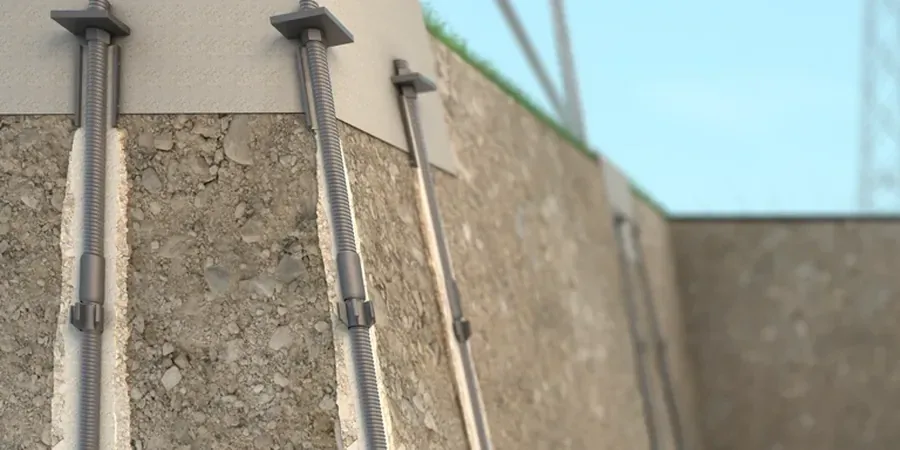
Illustrative image of Micropile design in Sydney
Micropile design in Sydney must account for Hawkesbury Sandstone transitions and aggressive coastal groundwater to ensure long-term capacity.

Our service areas

Scope of work

Hawkesbury Sandstone typically appears within 3 to 8 m of the surface across inner Sydney, but the overlying alluvial deposits in the Parramatta River corridor can reach 15 m. Micropile design in this environment must account for the transition from soft recent sediments to the competent rock head, often requiring a skin-friction calculation that varies along the pile shaft.
  • Load transfer through both end-bearing in sandstone and side friction in the clay/sand transition zone.
  • Corrosion protection for piles in the aggressive coastal ground water of Botany Bay.
A thorough test pit investigation prior to design yields the exact stratification needed to optimize pile diameter and spacing.
Technical reference — Sydney

Area-specific notes

Sydney's humid subtropical climate drives seasonal groundwater fluctuations of up to 3 m in the Botany Sands aquifer, which can alter effective stress on micropiles. When the water table rises after heavy rain, the skin friction in the alluvial layer drops significantly, potentially reducing the factored capacity. A micropile design that ignores this seasonal variation risks unacceptable settlement. The design must specify a drained or undrained condition based on the predicted drainage path of the site, and the contractor should verify the water table depth at the time of installation.

Need a geotechnical assessment?

Reply within 24h.

Email: contact@geotechnicalengineering1.co

Standards used

AS 2159:2009 — Piling Design and Installation, AS 5100.3:2017 — Bridge Design, Part 3: Foundations and Soil-Structure Interaction, FHWA-NHI-05-039 — Micropile Design and Construction Guidelines

Technical parameters

ParameterTypical value
Bar diameter (mm)25 - 50
Drill hole diameter (mm)100 - 250
Grout strength (MPa)30 - 55
Design working load (kN)200 - 1,200
Corrosion protection classAS 2159 Class 1 or 2
Typical embedment into rock (m)2 - 5

Quick answers

What is the typical cost range for a micropile design in Sydney?

For a standard residential or light commercial project, the design and documentation typically ranges between AU$2,530 and AU$8,160, depending on the number of piles, site access, and the level of geotechnical investigation required. This covers the structural calculations, grout specification, and a load test plan.

When should I choose micropiles over driven piles for a Sydney site?

Micropiles are preferred when headroom is limited (e.g., under existing buildings), when vibration must be minimized near heritage structures, or when the bearing stratum is deep and the access is narrow. Driven piles are more economical for open sites with a competent layer within 15 m.

How does the Hawkesbury Sandstone affect the micropile capacity?

Hawkesbury Sandstone provides high end-bearing capacity (typically 5 to 15 MPa), but its variable weathering profile requires careful assessment. Weakly cemented zones can reduce the shaft friction by up to 40%. A detailed rock core logging is essential to avoid overestimating the design capacity.

Location and service area

We serve projects across Sydney and its metropolitan area.

View larger map