SYDNY
SYDNEY
HomeGround improvementManejo de suelos orgánicos

Organic Soil Management in Sydney

Rigorous testing. Clear reporting.

LEARN MORE

When the first brick buildings went up around Circular Quay in the early 1800s, builders quickly learned that Sydney's geology wasn't as straightforward as the sandstone cliffs suggested. Below the surface, ancient watercourses and tidal flats had left behind deep deposits of soft organic clays and peat, particularly around the harbour foreshores and the Parramatta River corridor. We've seen how these compressible soils, often several metres thick, can cause decades of settlement if not addressed properly from the start. For any project encountering these conditions, a thorough assessment of the organic content and decomposition state is essential before committing to foundation design or earthworks. Our approach to organic soil management in Sydney starts with detailed site investigation, using careful sampling techniques that preserve the delicate fabric of these materials, followed by laboratory classification and consolidation testing to establish realistic settlement predictions and treatment options.

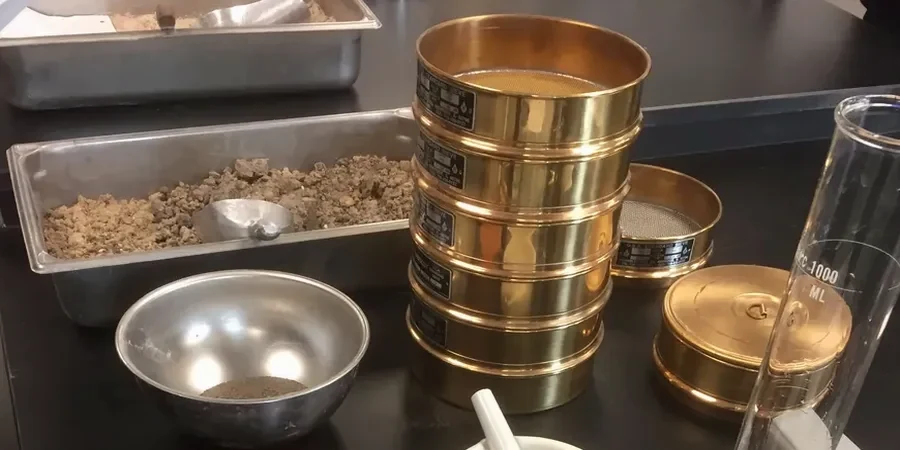
Illustrative image of Organic soil management in Sydney
Organic soils in Sydney's estuarine corridors can retain over 300% water by weight, making conventional compaction almost impossible without pre-treatment.

Our service areas

Scope of work

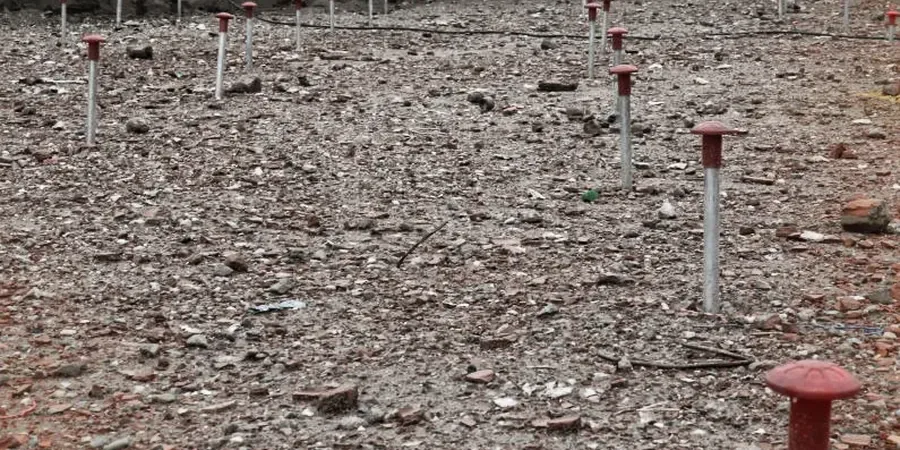
Sydney's humid subtropical climate accelerates the decomposition of organic matter in the upper soil profile, especially in the low-lying suburbs of Homebush, Mortdale, and along Duck River. What we typically find is a surface layer of dark, fibrous peat underlain by soft estuarine clays with organic content ranging from 15% to over 40% by dry weight. The high moisture retention and low shear strength of these materials demand specific handling – standard compaction techniques often fail because the pore water cannot dissipate quickly enough. In our experience, effective organic soil management here means first determining the degree of decomposition using the Von Post scale, then deciding whether to excavate and replace, preload with vertical drains, or stabilise the mass with chemical admixtures. Before selecting a treatment method, we routinely cross-reference the results with a groundwater infiltration test to understand drainage behaviour, since organic soils in Sydney tend to have very low hydraulic conductivity once compressed below the water table.
Technical reference — Sydney

Area-specific notes

Compare a building site on the Hawkesbury sandstone plateau at St Ives with one on the old swamp deposits of Wentworthville, and you are looking at two completely different geotechnical challenges. In the western suburbs, where former floodplains and backswamps prevail, organic soils can compress by 30% or more under modest loads, leading to differential settlement that cracks walls and distorts floor slabs. The real risk with organic soil management in Sydney is underestimating the time-dependent nature of secondary compression – these soils continue creeping long after primary consolidation ends, sometimes for years after construction. We have monitored sites where timber piles driven through peat into underlying sands were later exposed to oxidation, causing rapid decay and loss of support in older buildings along the Cooks River corridor.

Need a geotechnical assessment?

Reply within 24h.

Email: contact@geotechnicalengineering1.co

Standards used

AS 1726:2017 Geotechnical site investigations, AS 1289.4.1.1 Standard test methods for moisture, ash, and organic matter of peat, AS 4678:2002 Earth-retaining structures, Eurocode 7 (EN 1997-1:2004) Geotechnical design – peat and organic soils guidance

Technical parameters

ParameterTypical value
Organic content (loss on ignition)15-45% dry weight
Natural moisture content120-350%
Undrained shear strength (Su)10-35 kPa
Compression index (Cc)0.8-2.5
Coefficient of consolidation (cv)0.5-3.0 m²/year
Von Post humification classH2-H7 typical

Quick answers

What makes Sydney's organic soils different from other regions?

Sydney's organic soils are typically estuarine peats and peaty clays deposited in Holocene-age river valleys, with high fibre content and extremely low density. Unlike inland peats that are more uniform, Sydney's deposits often contain interbedded sands and shell layers, creating complex drainage and strength profiles that require careful site-specific characterisation rather than relying on regional averages.

How do you determine if organic soil can be reused on site?

We run loss on ignition tests and Atterberg limits on representative samples. If organic content exceeds 15% by dry weight, the material is generally unsuitable for structural fill without treatment. For landscape or low-load applications, we assess fibre decomposition and pH to verify long-term stability. In many Sydney projects, the organic topsoil is stripped and stockpiled for reuse in finished landscaping after blending with mineral soil.

What is the typical cost range for organic soil management in Sydney?

For a standard residential or small commercial site, organic soil management including characterisation testing, ground improvement design, and monitoring typically ranges between AU$1.170 and AU$3.440 depending on the depth of organic material, access constraints, and the treatment method selected. Larger developments with thick peat layers and wick drain installation fall at the higher end of that range.

Can organic soils cause foundation issues years after construction?

Yes, and this is a real concern in older suburbs like Concord, Homebush, and parts of the inner west where buildings sit on drained swamp deposits. Secondary compression (creep) in peat can continue for decades, causing slow but progressive settlement. We have seen cases where original floor levels dropped by 200 mm over 30 years. For new projects, we use long-term creep parameters (Cα) from oedometer tests to predict post-construction movement and design foundations to tolerate it.

Location and service area

We serve projects across Sydney and its metropolitan area.

View larger map