SYDNY
SYDNEY
HomeGeophysicsMicrotremores HVSR (Nakamura)

HVSR Microtremor Survey Sydney – Nakamura Method for Seismic Site Response

Rigorous testing. Clear reporting.

LEARN MORE

A 15-storey residential tower on the Parramatta River foreshore had a stiff clay profile over weathered shale, the kind of geology that can amplify long-period ground motion during an earthquake. We deployed a single-station HVSR microtremor survey (Nakamura method) to capture the site’s natural frequency and peak amplification. Within a day the team recorded ambient noise across four points, generating the H/V spectral ratio curves that revealed a clear 3.2 Hz resonance peak—critical data for the structural engineer designing the foundation. Before finalising the dynamic analysis, the project also required a complementary MASW Vs30 survey to cross-check shear-wave velocity profiles, ensuring the site classification met AS 1170.4 requirements for seismic design in Sydney.
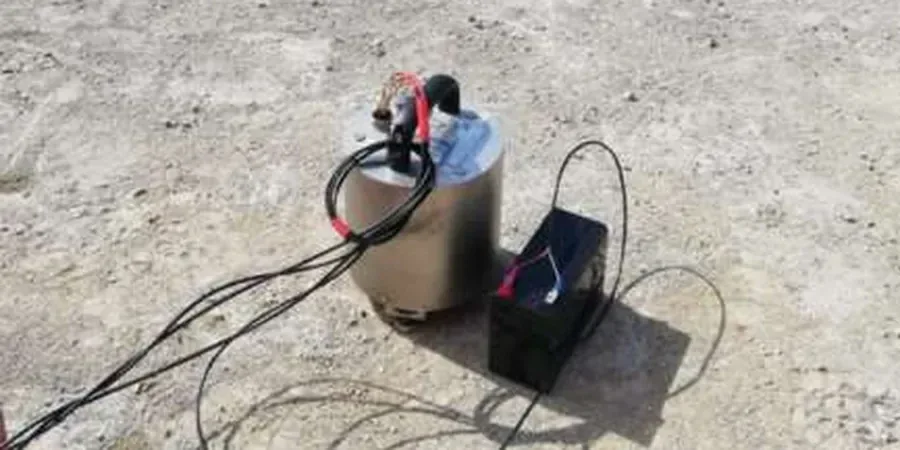
Illustrative image of HVSR microtremor survey (Nakamura method) in Sydney
The Nakamura method isolates the ellipticity of Rayleigh waves, delivering reliable H/V peaks over the Triassic geology that underlies most of Sydney.

Our service areas

Scope of work

The HVSR equipment we mobilise in Sydney is remarkably compact: a three-component tromometer (flat-response from 0.2 to 64 Hz) paired with a 24-bit digitiser and a GPS time-stamp unit. We deploy it on natural ground, avoiding nearby machinery, wind-excited structures, and heavy traffic corridors that could bias the microtremor record. Each recording lasts 20–40 minutes, capturing enough time windows to satisfy the SESAME 2004 criteria for H/V peak reliability. The data is processed using the Nakamura spectral ratio between horizontal and vertical components, isolating the ellipticity of Rayleigh waves. This method works particularly well over Sydney’s Triassic Hawkesbury Sandstone and Ashfield Shale sequences, where impedance contrasts between soil and bedrock produce unambiguous resonance peaks.
Technical reference — Sydney

Area-specific notes

Sydney sits on a mix of deep alluvial basins along the Parramatta and Nepean rivers and shallow rock sites in the eastern suburbs. The 1989 Newcastle earthquake (M5.6) caused damage 120 km away in the Sydney CBD because of soil amplification—buildings on the Botany Sands and Tuggerah Formation experienced resonance that multiplied ground motion by a factor of 3–4. An HVSR microtremor survey identifies those resonance frequencies before you pour concrete. Without it, a mid-rise structure on 20 m of alluvium could be tuned to the same 1.5–3 Hz range as the earthquake energy, leading to disproportionate damage even in a moderate event.

Need a geotechnical assessment?

Reply within 24h.

Email: contact@geotechnicalengineering1.co

Standards used

AS 1726:2017 — Geotechnical site investigations (HVSR as non-invasive method), AS 1170.4:2007 + Amdt 1 — Earthquake actions (site class determination), SESAME 2004 — Guidelines for the implementation of the H/V spectral ratio technique on ambient vibrations

Technical parameters

ParameterTypical value
Sensor typeThree-component tromometer (flat response 0.2–64 Hz)
Recording duration per station20–40 minutes
Frequency range analysed0.5–20 Hz
Peak detection criteriaSESAME 2004 guidelines
Output parametersf0, A0, H/V spectral ratio curve
Number of stations per projectTypically 4–8 points per 0.5 ha

Quick answers

What is the difference between HVSR and MASW for site classification in Sydney?

HVSR measures the horizontal-to-vertical spectral ratio of ambient vibrations to find the fundamental resonance frequency (f0) of the soil column. MASW directly measures shear-wave velocity with depth to compute Vs30. HVSR is faster (hours per station), works better on stiff sites where Vs30 contrast is low, and is less affected by lateral soil changes. MASW provides depth profiles; HVSR provides the resonant behaviour that actually controls seismic response. We often use both together—HVSR to map frequency variability across a large site, then targeted MASW to calibrate Vs30 for the design spectrum.

How much does an HVSR microtremor survey cost in Sydney?

For a typical residential or commercial site of 0.2–0.5 ha with 4–6 measurement stations, the total cost including acquisition, processing, and a report with interpreted f0 and site class ranges from AU$2,240 to AU$3,680. Larger sites or those requiring additional stations for variability mapping fall at the upper end. Prices exclude access permits, traffic management, and any supplementary borehole data integration.

Can HVSR detect deep soil layers or only the top few metres?

HVSR detects the interface corresponding to the largest impedance contrast in the top few hundred metres. In Sydney, that contrast is typically the soil–bedrock interface, which can be 2 m deep in the eastern suburbs or over 40 m deep in the Parramatta alluvial basin. The method does not resolve layer-by-layer profiles—that requires MASW or boreholes. Instead, it tells you the natural period of the entire soil column, which is the key parameter for evaluating resonance with a building’s fundamental period.

Location and service area

We serve projects across Sydney and its metropolitan area.

View larger map