SYDNY
SYDNEY
HomeInvestigationEnsayo SPT (Standard Penetration Test)

SPT (Standard Penetration Test) in Sydney: Reliable Soil Data for Safer Foundations

Rigorous testing. Clear reporting.

LEARN MORE

Sydney's coastal geology creates a complex mix of Hawkesbury Sandstone, shale, and deep alluvial deposits along the Parramatta River. The humid subtropical climate and historic land reclamation in areas like Pyrmont and Barangaroo mean fill layers can hide abrupt changes in density. In our experience, the SPT is the most direct way to catch these transitions before they cause settlement issues. By driving a split-spoon sampler with a 63.5 kg hammer, the test delivers N-values that correlate to relative density and shear strength. For sites near the harbour foreshore, combining SPT data with a georradar GPR survey helps map buried utilities and old seawalls before drilling begins.
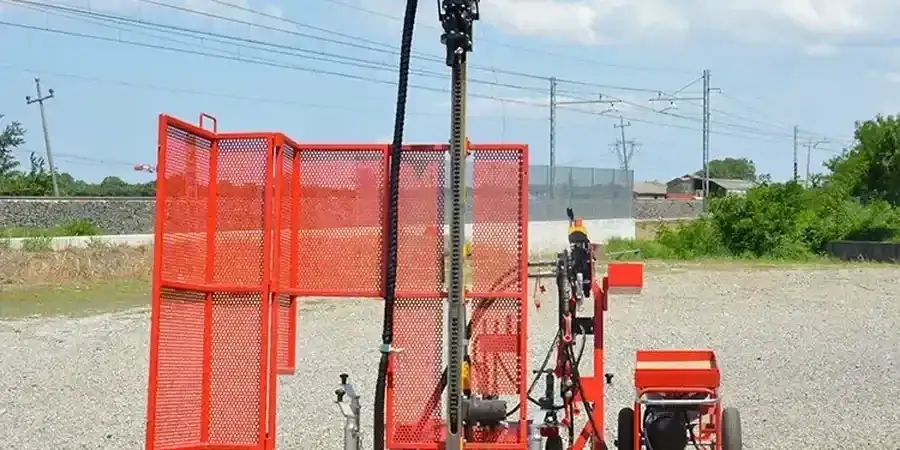
Illustrative image of SPT (Standard Penetration Test) in Sydney
A single SPT borehole can reveal an abrupt transition from loose fill to deep sandstone, saving weeks of redesign later.

Our service areas

Scope of work

Sydney's urban expansion into the Cumberland Plain and western suburbs has pushed development onto deep residual soils and ancient river terraces. The SPT method, standardised under AS 1726, remains the benchmark for classifying these materials in situ. The test records blow counts per 300 mm of penetration, and the team logs both the driving resistance and the recovered sample. For a typical residential site in Baulkham Hills or a high-rise in Chatswood, the SPT provides:
  • Continuous N-value profiles through sand, clay, and weathered rock
  • Disturbed samples for visual classification and moisture content
  • Correlation with undrained shear strength in cohesive strata
This straightforward procedure reveals the soil's actual behaviour under dynamic loading, which is critical when designing footings or assessing excavation stability. The test is also the basis for liquefaction screening in the Sydney Basin, where saturated sands in the Botany Sands aquifer require careful evaluation before seismic design.
Technical reference — Sydney

Area-specific notes

AS 1726 and AS 4678 require geotechnical models to account for variable ground conditions, and Sydney's legacy of unrecorded fill from the 19th century makes this especially relevant. Without SPT data, loose pockets in reclaimed land or old creek beds can go undetected until foundation loads trigger differential settlement. The risk is highest in areas like Zetland, where brick pits were backfilled with demolition rubble. An SPT profile that shows N-values below 6 in the first 3 metres signals the need for deeper foundations or ground improvement before slab construction.

Need a geotechnical assessment?

Reply within 24h.

Email: contact@geotechnicalengineering1.co

Standards used

AS 1726:2017 (Geotechnical site investigations), AS 1289.6.3.1 (Standard test method for SPT), Youd & Idriss (2001): Liquefaction resistance based on SPT

Technical parameters

ParameterTypical value
Hammer weight63.5 kg (140 lb)
Drop height760 mm (30 in)
Sampler typeSplit spoon, 35 mm ID (standard)
Rod length correctionCE factor per AS 1726
N-value range (typical Sydney sand)4 to 50 blows/300 mm

Quick answers

What does the N-value actually tell me about Sydney soils?

The N-value (blows per 300 mm) indicates relative density in sands and consistency in clays. In Sydney, N below 4 often means loose fill or soft alluvium, while N above 50 signals very dense sand or weathered rock. It's the primary input for bearing capacity estimates and settlement calculations.

How many SPT boreholes do I need for a typical Sydney house?

For a standard residential slab on the Cumberland Plain, two boreholes to 6 m depth usually suffice. On the Northern Beaches or coastal cliffs, three to four boreholes may be needed to capture variable rock profiles. AS 1726 recommends spacing based on foundation type and site complexity.

Can SPT detect old fill or undocumented ground disturbance?

Yes, it's one of the best tools for that. Sudden drops in N-value within a profile often indicate old excavations, backfilled pits, or creek courses. In areas like Alexandria or Erskineville, this is common and the SPT profile flags it before foundation design proceeds.

How much does an SPT investigation cost in Sydney?

The typical range for a standard SPT borehole with logging and basic laboratory testing is between AU$930 and AU$1,250. The final cost depends on depth, access, and number of boreholes. For large subdivisions or high-rises, volume discounts apply.

Location and service area

We serve projects across Sydney and its metropolitan area.

View larger map

Watch how it works