A common mistake among construction teams in Sydney is assuming that the Hawkesbury Sandstone behaves uniformly across the city. In reality, the weathered profile varies dramatically from the ridgetops of Hornsby down to the shale bands of the Inner West. Relying on visual classification alone for a deep excavation on George Street or a bridge abutment near Parramatta can lead to unconservative strength assumptions. The triaxial test provides the controlled stress path data needed to distinguish between Class II and Class IV sandstone and to quantify the effective stress parameters of the estuarine clays that dominate the Botany Bay corridor. Without these results, foundation designs risk either excessive conservatism or, worse, undetected weakness zones that only appear under load.
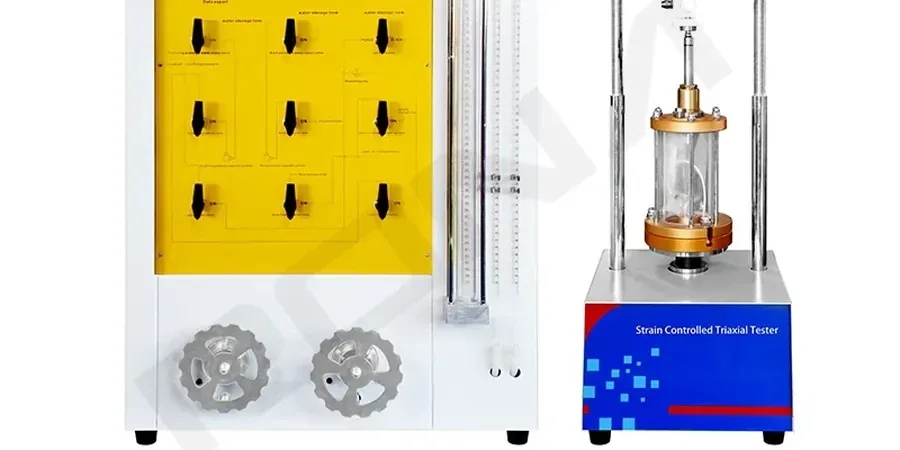
One borehole in Sydney can intersect residual clay, weathered sandstone and fresh rock within eight metres: triaxial testing at multiple confinements is essential.
This service complements our laboratory testing work for a complete project analysis.