SYDNY
SYDNEY
HomeFoundationsRaft/Mat Foundation Design

Raft/Mat Foundation Design for Sydney

Rigorous testing. Clear reporting.

LEARN MORE

The contrast between Sydney's eastern suburbs, sitting on Hawkesbury Sandstone, and the western areas with deep clay profiles is stark. A raft foundation design that works in Bondi may fail in Penrith. The difference lies in soil stiffness and bearing capacity. For the clay-dominated west, a study of soil compressibility is essential before committing to a mat layout. In the sandstone east, the challenge shifts to rock profile variability and excavation costs. Each site demands a tailored raft solution, not a generic slab.
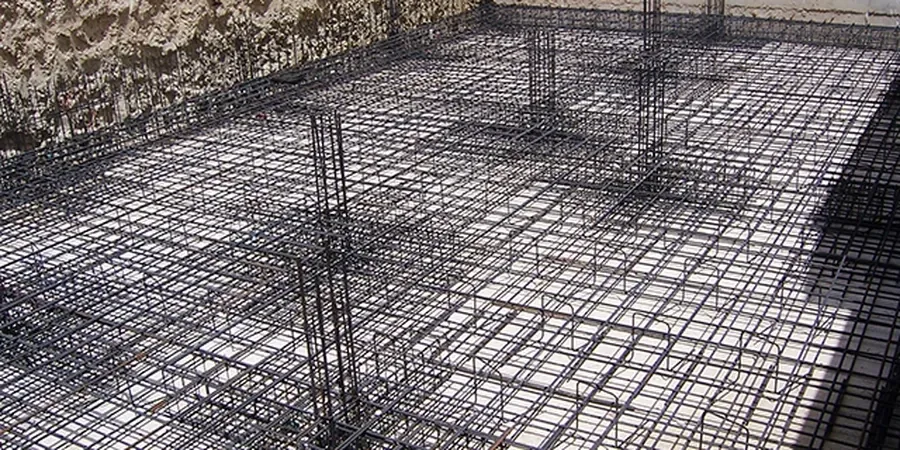
Illustrative image of Raft/mat foundation design in Sydney
In Sydney, a raft foundation's success often depends more on controlling differential settlement than on ultimate bearing capacity.

Our service areas

Scope of work

In Sydney we often see projects where the raft thickness is driven by serviceability limits rather than ultimate bearing capacity. The soft clays of the Cumberland Plain can settle unevenly under a mat if the soil stiffness profile is not mapped in detail. That is why we always pair raft design with ground investigation using CPT to get continuous soil profiles. Rafts work well here when differential settlement is the main risk. They spread the load over a large area. But they are heavy. That weight can actually worsen settlement in soft ground if the bearing layer is deep. So we check the net bearing pressure against the soil's pre-consolidation stress. A good raft design balances structural stiffness with the actual ground response.
Technical reference — Sydney

Area-specific notes

Sydney recorded 5.4 magnitude earthquakes in 1989 and 1994. The risk of seismic amplification in the Botany Bay soft sediments is real. A raft foundation must account for liquefaction potential in the sand layers beneath the alluvial plains. We use site response analysis to check if the mat can resist cyclic loading. In areas like the Northern Beaches, the rock profile can dip sharply. That creates a wedge of soft soil under part of the raft. Uneven support leads to cracking. The raft must be stiff enough to bridge these soft zones, or the soil below must be improved. We always check the site class per AS 1170.4 before finalizing the design.

Need a geotechnical assessment?

Reply within 24h.

Email: contact@geotechnicalengineering1.co

Standards used

AS 1726:2017 Geotechnical site investigations, AS 3600:2018 Concrete structures (raft reinforcement design), AS/NZS 1170.4:2007 Structural design actions (earthquake), Eurocode 7 (EN 1997-1:2004) — serviceability limit states

Technical parameters

ParameterTypical value
Net bearing pressure50–150 kPa (clay) / 300–600 kPa (sandstone)
Mat thickness400–1200 mm typical
Modulus of subgrade reaction (k)10–50 MN/m³ (clay) / 50–150 MN/m³ (rock)
Allowable differential settlementL/500 to L/300
Reinforcement ratio0.15%–0.5% of cross-section
Factor of safety (bearing)≥ 2.5 (AS 1726)

Quick answers

When is a raft foundation better than individual footings in Sydney?

A raft is better when the soil bearing capacity is low and variable across the site. In western Sydney clays, individual footings can settle differently. The raft ties them together, spreading the load and reducing differential settlement. It also works well when groundwater is shallow, as the slab acts as a barrier.

What soil parameters are critical for raft design in Sydney?

The modulus of subgrade reaction (k) is the most important parameter. It controls the slab's bending moments. We also need the pre-consolidation stress in clays to avoid yielding, and the site class for seismic design. In sandstone areas, the rock quality designation (RQD) and joint spacing matter.

How much does a raft foundation design cost in Sydney?

The cost for a geotechnical assessment and raft design package in Sydney ranges from AU$1.770 to AU$6.210, depending on site complexity and the number of boreholes required. This includes soil testing, settlement analysis, and final structural drawings.

Can a raft foundation be used on sloping sites in Sydney?

Yes, but it requires stepped rafts or a thickened edge to accommodate the slope. The geotechnical investigation must confirm that the underlying soil is consistent across the slope. We also check for potential sliding along the soil-rock interface, especially in the Hawkesbury Sandstone areas.

Location and service area

We serve projects across Sydney and its metropolitan area.

View larger map