SYDNY
SYDNEY
HomeLaboratoryAnálisis granulométrico (tamices + hidrómetro)

Grain Size Analysis in Sydney – Sieve & Hydrometer Testing

Rigorous testing. Clear reporting.

LEARN MORE

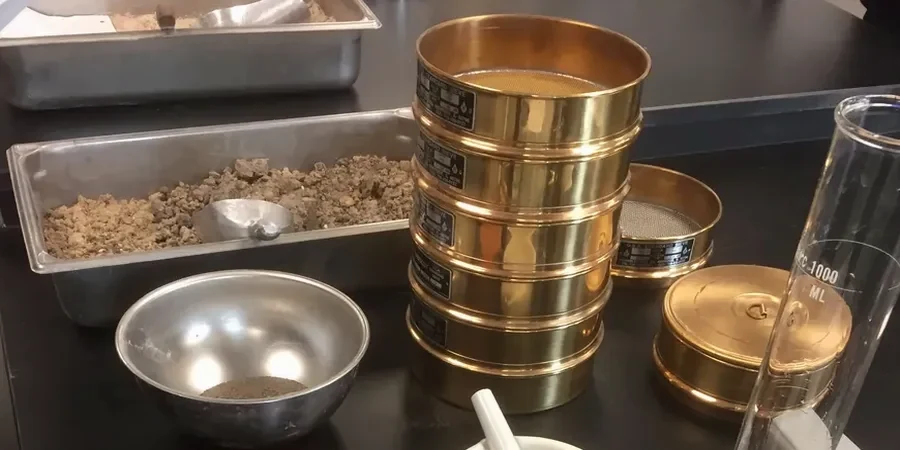
In Sydney, the soil tells a story before you even break ground. We run grain size analysis on samples from Parramatta clay to Hawkesbury sandstone residuals. The mix of particle sizes defines how water drains, how compaction behaves, and whether a slope will hold. We process each sample through a nested sieve stack for the coarse fraction. The fine fraction below 75 microns goes to the hydrometer. It sounds simple, but the interpretation is where experience counts. A well-graded sand from the Nepean floodplain behaves nothing like a poorly graded sand from the Eastern Suburbs. Before you design a foundation, you need to confirm those layers with a placa de carga test on site. That link between lab numbers and field performance is what we deliver every day.
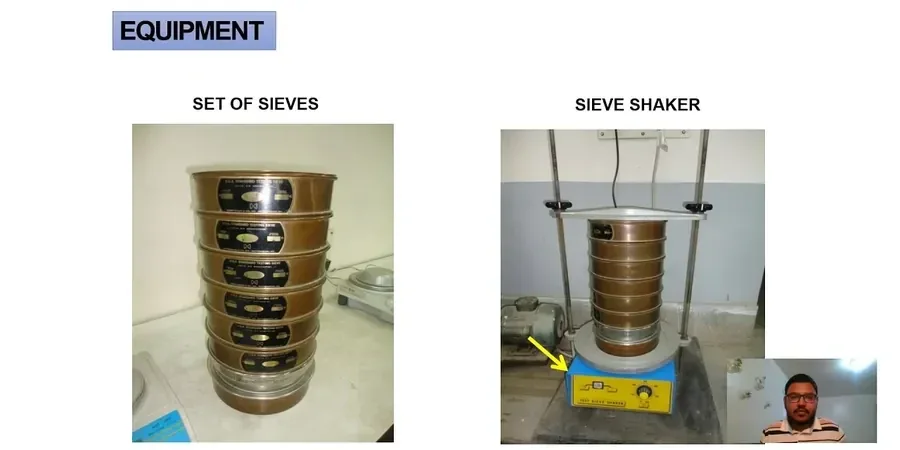
Illustrative image of Grain size analysis (sieve + hydrometer) in Sydney
A single grain size curve can decide whether your fill compacts properly or your pavement drains in ten years.

Our service areas

Scope of work

Take two sites in Sydney: a development in Penrith versus one in North Sydney. The Penrith site has sandy alluvium, relatively uniform, low fines content. The North Sydney site sits on residual clay from weathered shale. The grain size curves look completely different. For Penrith we rely on dry sieving per AS 1726. For the clay-rich North Sydney sample we need wet sieving plus hydrometer sedimentation. That is where the method matters. We follow AS 1289.3.6.1 and D6913 as references. The hydrometer test uses a dispersant to break down clay flocs. Without that step you get a false coarse distribution. We also run a limites-atterberg on the same fine fraction to understand plasticity. Combining both tests gives you the full soil classification – USCS or AS 1726 groups.
Technical reference — Sydney

Area-specific notes

AS 1726 requires grain size data for any fill or foundation classification. In Sydney, the risk is ignoring the fines content in the Botany Sands or the dispersive clays near Camden. A soil with more than 12% fines can become unstable under seepage. If the hydrometer shows a high clay fraction, you need to evaluate erodibility. We also cross-check against the AS 4678 earth retaining structures code. A wrong grain size curve leads to overestimating drainage capacity. That is how retaining walls fail. We flag those risks before the design is final.

Need a geotechnical assessment?

Reply within 24h.

Email: contact@geotechnicalengineering1.co

Standards used

AS 1726-2017 (Geotechnical site investigations), AS 1289.3.6.1 (Standard test method for particle-size analysis), AS 1289.3.6.1 (Sieve analysis), AASHTO T-88 (Particle size analysis of soils)

Technical parameters

ParameterTypical value
MethodWet sieving + dry sieving per AS 1726-2017
Sieve range75 mm down to 75 microns (No. 200)
Hydrometer range75 microns down to 0.5 microns
Sample mass200 g to 5000 g depending on max particle size
DispersantSodium hexametaphosphate solution (40 g/L)
Sedimentation timeReadings at 0.5, 1, 2, 4, 8, 24, and 48 hours

Quick answers

What is the difference between sieve and hydrometer analysis?

Sieve analysis separates particles down to 75 microns using a stack of mesh screens. The hydrometer extends the range down to 0.5 microns by measuring the sedimentation rate of fine particles in a water column. Both are needed for complete grain size distribution in Sydney soils that contain clay.

How much does grain size analysis cost in Sydney?

For a standard sieve analysis the cost ranges from AU$180 to AU$290 per sample. Adding the hydrometer test increases the range to AU$240–AU$350 depending on the number of sedimentation readings and the dispersion time required.

Why do I need a hydrometer test for clay soils?

Clay particles are too small for standard sieves. The hydrometer uses Stokes' law to calculate particle size from settling velocity. Without it you miss the clay fraction, which controls plasticity, shrink-swell behavior, and erodibility in Sydney's residual soils.

How long does a grain size test take?

A dry sieve test takes one working day. A wet sieve plus hydrometer requires a minimum of 48 hours because the sedimentation readings extend over two days. Full classification including curve plotting takes three to four business days.

Location and service area

We serve projects across Sydney and its metropolitan area.

View larger map

Watch how it works