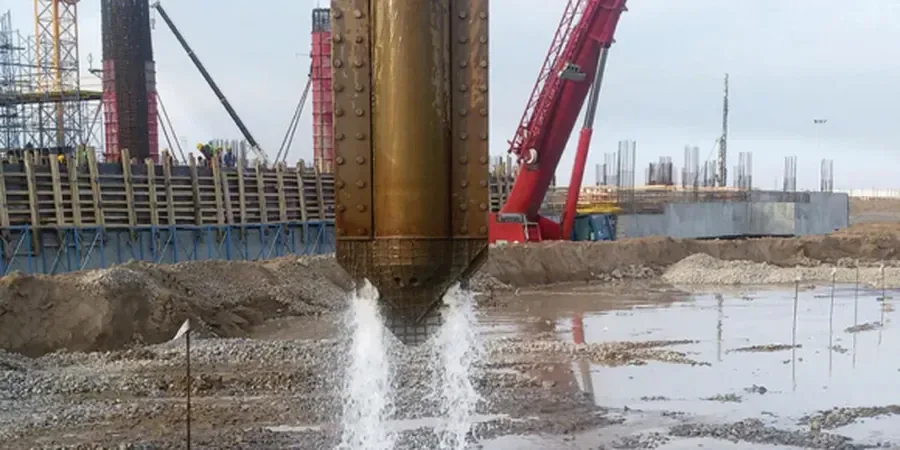
Ground improvement in Sydney encompasses a suite of geotechnical techniques designed to enhance the engineering properties of soil and rock, ensuring stability, bearing capacity, and durability for construction projects. This category is critical due to Sydney's diverse geological profile, which ranges from deep residual soils and estuarine clays to loose sands and uncontrolled fill. Effective ground improvement mitigates risks such as differential settlement, liquefaction, and slope instability, which are common concerns in a city where urban development increasingly encroaches on marginal land. By modifying in-situ ground conditions, engineers can avoid costly deep foundations or excavation and replacement, making projects more sustainable and economical. The importance of these methods is underscored by Sydney's booming infrastructure sector, where major transport, commercial, and residential developments demand reliable ground performance over long service lives.
Sydney's geology presents unique challenges that make ground improvement indispensable. The region is underlain by the Sydney Basin, characterised by Triassic sandstones and shales of the Hawkesbury Sandstone and Wianamatta Group. However, near the surface, Quaternary alluvium, marine clays, and aeolian sands dominate many development sites. In areas like the Botany Basin and Homebush Bay, deep deposits of soft, compressible clays and loose sands are prevalent, often requiring techniques such as preloading with surcharge design to accelerate consolidation. Along the coastal fringe and near the Georges River, loose, saturated sands can be prone to liquefaction, necessitating vibrocompaction design to densify the ground. Additionally, the presence of reactive clays in western Sydney suburbs introduces shrink-swell behaviour that must be managed through moisture conditioning or chemical stabilisation.
Regulatory compliance in New South Wales is governed primarily by AS 2159-2009 (Piling – Design and Installation) and AS 4678-2002 (Earth-Retaining Structures), which set performance criteria for treated ground. The National Construction Code (NCC) Volume One, incorporating the Building Code of Australia, mandates that foundations and earthworks achieve specified limit states for strength and serviceability. Furthermore, relevant Australian Standards such as AS 3798-2007 (Guidelines on Earthworks for Commercial and Residential Developments) and AS 1289 series for soil testing define the verification requirements for improved ground. Local council development control plans (DCPs) often impose additional constraints, particularly in environmentally sensitive areas or on sites with acid sulfate soils, where geotechnical drainage design plays a crucial role in managing groundwater and preventing contamination.
The types of projects requiring ground improvement in Sydney are extensive and varied. Large-scale infrastructure works, including the WestConnex motorway and Sydney Metro expansions, frequently encounter variable ground conditions where dynamic compaction design or grouting are employed to treat deep fills and karstic features. High-density residential towers on reclaimed land in suburbs like Rhodes and Wentworth Point rely on preloading and surcharge to improve soft estuarine clays. Industrial facilities and warehouse developments with heavy floor loadings often specify geogrid reinforcement to enhance subgrade performance, making geogrid specification a key service. Moreover, coastal and marina projects demand specialised solutions for liquefiable sands, while brownfield redevelopments throughout the city require thorough analysis of existing fill and contamination to design appropriate improvement strategies.
Ground improvement refers to a range of techniques that alter the physical properties of soil or rock to enhance bearing capacity, reduce settlement, or mitigate liquefaction. In Sydney, it is typically required on sites with soft clays, loose sands, uncontrolled fill, or reactive soils, where natural ground conditions cannot support the proposed structure without excessive deformation or instability.
Selecting the appropriate method requires a thorough geotechnical investigation, including boreholes, cone penetration tests, and laboratory analysis. Factors such as soil type, depth of treatment, groundwater conditions, and project loads dictate whether preloading, dynamic compaction, vibrocompaction, grouting, or geogrid reinforcement is most effective, always in compliance with AS 3798 and local council requirements.
Environmental considerations include managing groundwater discharge, preventing disturbance to acid sulfate soils common in estuarine areas, and controlling noise and vibration during dynamic compaction. Projects must adhere to NSW EPA guidelines and local DCPs, often requiring drainage design to handle perched water and avoid off-site contamination.
Duration varies widely depending on the method and soil conditions. Preloading with surcharge may require several months for consolidation of soft clays, while vibrocompaction or dynamic compaction can be completed in weeks. Grouting and geogrid installation are generally faster, but a site-specific schedule should be developed based on the geotechnical model and regulatory testing requirements.
We serve projects across Sydney and surrounding areas.