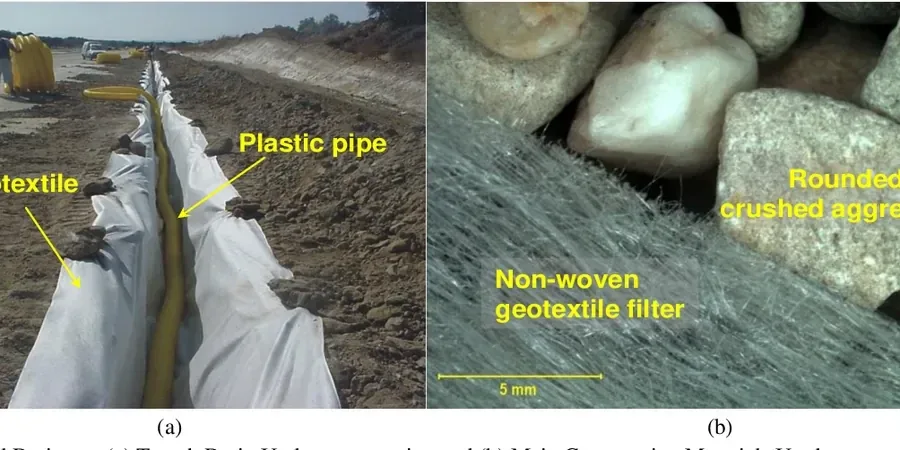
Sydney's rapid suburban expansion after the 1960s pushed road networks into areas underlain by deeply weathered Hawkesbury Sandstone and Wianamatta Group shales. These geological formations, combined with the city's annual rainfall of around 1,200 mm, create persistent challenges for road drainage. Water infiltrating the subgrade saturates the soil, reducing its shear strength and triggering pavement distress. A proper geotechnical road drainage system intercepts that water before it reaches the formation. In our background, retrofitting drainage on roads built without adequate subsurface measures is far more costly than installing it during construction. That is why we always assess the site's permeability and groundwater regime first, then design filter layers, trench drains, or horizontal blankets tailored to the local conditions. Without this approach, pavements on Sydney's reactive clay subgrades can heave or collapse within a few years.
In Sydney's reactive clay terrain, a road drainage system designed without permeability testing is a gamble with the pavement's service life.