A common mistake made by contractors on Sydney projects is trusting published bearing tables without a site-specific plate load test (PLT). The city's geology varies sharply — from competent Hawkesbury Sandstone in the north shore to soft estuarine clays along the Parramatta River. Relying on generic values can lead to differential settlements under working loads. A plate load test measures actual deformation modulus at foundation level. It captures the real stiffness of the founding stratum, not a textbook figure. This is why engineers working on sensitive structures like transfer slabs or crane bases insist on a PLT before pouring concrete. The test follows AS 1726-2017 procedures, typically using a 300 mm or 450 mm diameter plate. Load is applied in increments up to 1.5 times the design bearing pressure, and settlement is monitored with dial gauges referenced to a datum beam. Without this verification, you risk over-design or, worse, under-design.
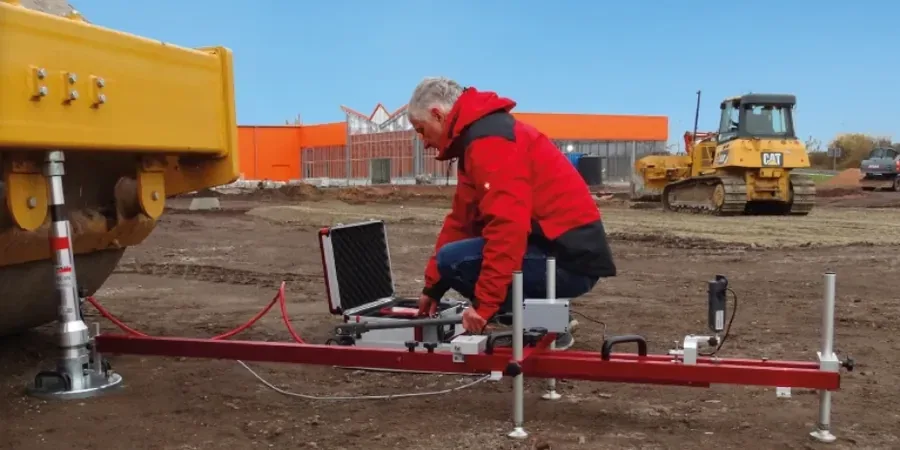
A single plate load test can verify whether the assumed bearing pressure of 500 kPa on weathered sandstone is actually mobilised under controlled conditions.