SYDNY
SYDNEY
HomeInvestigationCalicata exploratoria

Exploratory Test Pit for Geotechnical Investigations in Sydney

Rigorous testing. Clear reporting.

LEARN MORE

Sydney's coastal geology, shaped by the Hawkesbury Sandstone and Quaternary alluvial deposits along the Parramatta River, creates highly variable subsurface conditions. An exploratory test pit provides direct visual access to these profiles, revealing soil stratification, groundwater seepage, and the presence of fill or bedrock within the pit walls. For projects in suburbs like Penrith or the Northern Beaches, this method is essential to confirm the actual conditions before committing to foundation design. Combining these observations with a study of plate load testing helps calibrate bearing capacity estimates on site.
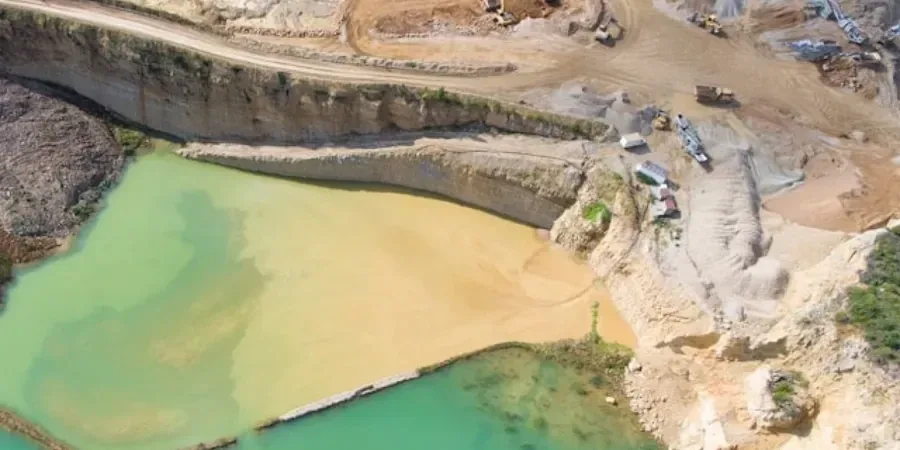
Illustrative image of Exploratory test pit in Sydney
Direct visual inspection of soil strata in an exploratory test pit eliminates uncertainty from indirect methods, confirming conditions before foundation design.

Our service areas

Scope of work

In Sydney's eastern suburbs, residual clay soils overlying sandstone are common, while the western plains feature deep alluvial sequences. The exploratory test pit method adapts to both: it allows engineers to log soil types, sample disturbed and undisturbed material, and perform in-situ density tests. The team follows AS 1726 for logging and sampling protocols. For granular fills or collapsible soils often found near the Cooks River, a dilatometer test can complement the pit data for deformation modulus. Key parameters recorded include:
  • Soil classification per AS 1726 and AS 1726
  • Depth to bedrock or refusal
  • Groundwater level and seepage rate
  • Bulk density and moisture content
Technical reference — Sydney

Area-specific notes

A common oversight among Sydney builders is relying solely on borehole data without a test pit. Boreholes miss lateral variability in fill thickness, root zones, or buried services. On a recent residential project in the Hills District, the design assumed uniform sandstone at 3 m, but the test pit exposed a 1.5 m soft clay layer over weathered shale. Without that direct observation, the slab would have settled unevenly. Always pair test pits with differential settlement analysis when variable fill is suspected.

Need a geotechnical assessment?

Reply within 24h.

Email: contact@geotechnicalengineering1.co

Watch how it works

Standards used

AS 1726-2017 (Geotechnical site investigations), AS 1726 (Description and identification of soils), AS 4678-2002 (Earth-retaining structures – relevant for pit shoring)

Technical parameters

ParameterTypical value
Typical pit depth2.0 – 4.5 m (excavator dependent)
Pit width0.8 – 1.2 m
Soil samplingDisturbed (bags) and undisturbed (block samples)
In-situ testingPocket penetrometer, shear vane, sand replacement density
Logging standardAS 1726-2017, AS 1726

Quick answers

How deep can a test pit go in Sydney soils?

Typically 2.0 to 4.5 m depending on excavator reach and ground conditions. In loose sands or water-bearing layers, depth may be limited to ensure safe benching per AS 1726.

What is the price range for an exploratory test pit in Sydney?

The cost usually falls between AU$670 and AU$1,230 per pit, including excavation, logging, sampling, and a basic report. Volume discounts apply for multiple pits.

How does a test pit differ from a borehole?

A test pit provides direct visual access to the soil profile, showing layering, roots, and fill. Boreholes give continuous depth data but miss lateral variation. For shallow foundations, pits are often more informative.

Do I need a test pit if I already have borehole logs?

Yes, especially in Sydney's variable geology. Boreholes may miss isolated pockets of soft clay or buried debris. A test pit confirms the spatial continuity of the logged strata.

Location and service area

We serve projects across Sydney and its metropolitan area.

View larger map