SYDNY
SYDNEY
HomeSlopes & WallsSlope Stability Analysis

Slope Stability Analysis in Sydney – Geotechnical Assessment for Safe Excavations

Rigorous testing. Clear reporting.

LEARN MORE

A mid-rise development in North Sydney required a 9-metre excavation into a weathered sandstone slope. The site, underlain by residual soils and jointed rock, demanded a rigorous slope stability analysis to define safe batter angles and design temporary shoring. Before finalising the earthwork plan, we integrated data from excavaciones profundas to evaluate the influence of adjacent basement walls on the global factor of safety. Our team ran limit equilibrium models using Bishop and Spencer methods, calibrated with borehole logs and shear strength parameters from core samples. The study confirmed that the as-proposed 1.5H:1V slope would meet AS 4678 requirements with a factor of safety above 1.5 under drained conditions.
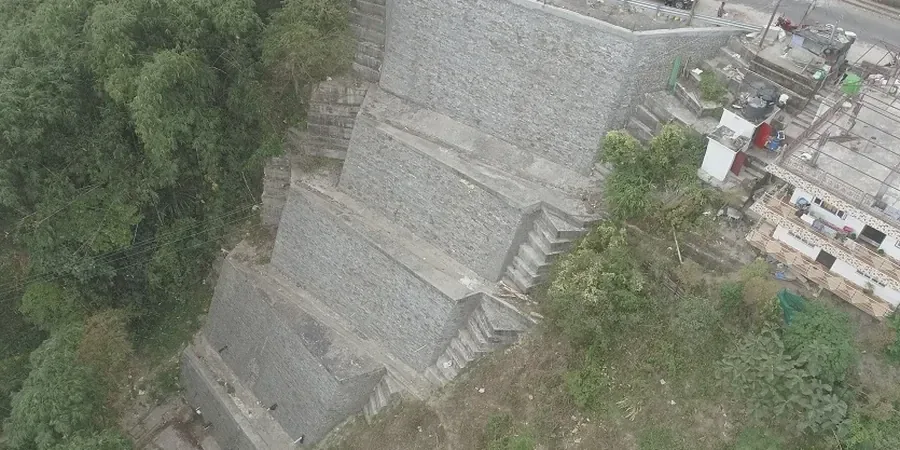
Illustrative image of Slope stability analysis in Sydney
A 10-metre cut in weathered sandstone can lose 30% of its factor of safety if a perched water table develops after heavy rain.

Our service areas

Scope of work

In Sydney, many engineers assume that Hawkesbury Sandstone provides inherently stable slopes, but the reality is more complex. Weathering profiles vary drastically within 50 metres, and clay-infilled joints can reduce effective friction angles by 10 degrees or more. Our approach always includes a falla-taludes back-analysis when historical instability exists nearby, because precedent conditions often reveal more than generic parameters. We also perform sensitivity analyses on groundwater levels, since seasonal rainfall in the Sydney Basin can raise phreatic surfaces by 2–3 metres. The key deliverables include:
  • Limit equilibrium and shear strength reduction (FEM) models
  • Probabilistic assessment of slip surfaces
  • Recommendations for reinforcement or drainage measures
Each report references AS 1726 for soil classification and AS 4678 for allowable factors of safety.
Technical reference — Sydney

Area-specific notes

The most common risk we see in Sydney slope projects is delayed recognition of structural defects in the rock mass. A single unfavourable joint set can turn a stable 8-metre cut into a wedge failure during the first heavy storm. Our field team uses scanline surveys and televiewer logs to map discontinuities, then models them explicitly in 3D limit equilibrium software. Without this level of detail, the analysis may overestimate the factor of safety by 20–30%. For sites in the Hornsby Plateau, we also incorporate data from mass-wasting models because the residual soil profile there is notoriously collapsible when saturated.

Need a geotechnical assessment?

Reply within 24h.

Email: contact@geotechnicalengineering1.co

Standards used

AS 4678:2002 – Earth-retaining structures (factors of safety), AS 1726:2017 – Geotechnical site investigations, AS/NZS 1170.4:2007 – Structural design actions (seismic)

Technical parameters

ParameterTypical value
Minimum factor of safety (long-term, drained)1.5 (AS 4678)
Shear strength reduction methodFEM (Phase² / RS2)
Groundwater modelSteady-state pore pressure from monitoring wells
Slip surface searchNon-circular (Spencer, Morgenstern-Price)
Seismic coefficient (ka)0.10 (AS/NZS 1170.4 Sydney)

Quick answers

When is slope stability analysis required for a development in Sydney?

It is mandatory for any excavation or fill exceeding 3 metres in height, or when the slope angle exceeds 27 degrees. Council conditions often require a certified geotechnical report that addresses both short-term (undrained) and long-term (drained) stability per AS 4678.

How much does a slope stability analysis cost in Sydney?

The typical range for a residential or small commercial site is AU$2.090 to AU$5.540. The variation depends on the number of cross-sections, the need for groundwater monitoring and whether advanced FEM modelling is required.

What methods do you use to calculate the factor of safety?

We apply limit equilibrium methods (Bishop simplified, Spencer, Morgenstern-Price) for circular and non-circular slip surfaces. For complex geometries, we use shear strength reduction FEM. All models are calibrated against borehole data and laboratory triaxial tests.

Can you assess existing slopes that have already failed?

Yes. We conduct forensic back-analyses on failed slopes to determine the mobilised shear strength at failure. This information is then used to design remedial measures such as soil nails, drainage blankets or retaining walls. We have handled several cases in the Ku-ring-gai area following the 2022 floods.

Location and service area

We serve projects across Sydney and its metropolitan area.

View larger map