SYDNY
SYDNEY
HomeUnderground ExcavationsMonitoreo geotécnico de excavaciones

Geotechnical Excavation Monitoring in Sydney

Rigorous testing. Clear reporting.

LEARN MORE

We were on a site in Surry Hills last year. A 15-story tower going up, with heritage terraces right next door. The excavation went 12 meters deep. Every centimeter of wall movement mattered. That is exactly why we run geotechnical excavation monitoring in Sydney the way we do. We install inclinometers, survey prisms, and piezometers before the first bucket of spoil comes out. On that job, readings every six hours during the first three meters of cut kept the terrace walls crack-free. Before starting, we always cross-check with a placa de carga to confirm the working platform stiffness. It saves time and avoids surprises.
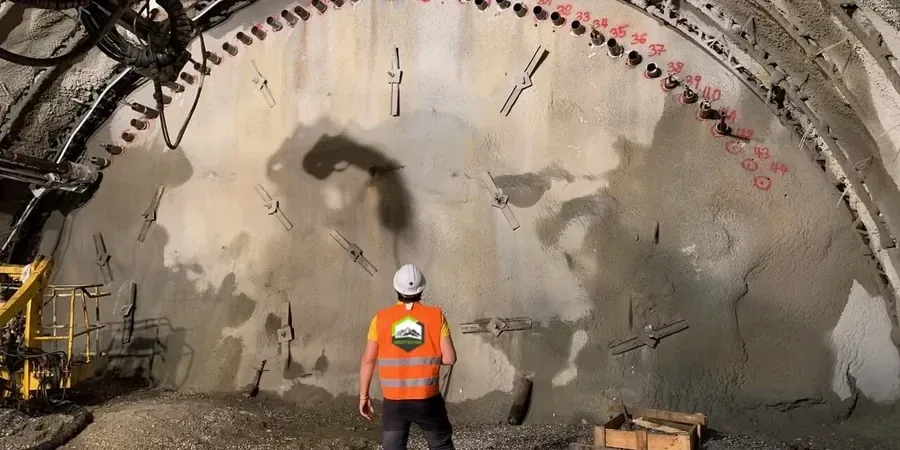
Illustrative image of Geotechnical excavation monitoring in Sydney
In Sydney, a 5 mm movement in a historic terrace wall can trigger a stop-work order. We prevent that.

Our service areas

Scope of work

We use a mix of manual and automated gear. For deep excavations, we favor in-place inclinometers with 0.5-meter spacing. They give us continuous tilt profiles down to the toe. On shallow cuts, we deploy robotic total stations that shoot prisms every 30 minutes. The data streams to our cloud platform in real time. We also run vibrating-wire piezometers in the Hawkesbury Sandstone. Groundwater response in Sydney can be fast after heavy rain. For lateral support verification, we combine readings with muros-pantalla design checks. Our team holds NATA accreditation for field instrumentation under ISO/IEC 17025.
Technical reference — Sydney

Area-specific notes

Compare the sands of the Botany aquifer with the shale of North Sydney. Two different worlds. In Botany, excavation monitoring must track pore pressure dissipation. Drawdown of 2 meters can cause consolidation settlement in the surrounding streets. In North Sydney, the shale has high stiffness but joint sets that open under stress relief. A monitored lateral movement of 10 mm in shale can indicate a block sliding risk. We adjust instrument density and frequency based on the formation. Loose sands get more piezometers. Fractured rock gets more inclinometers. That local knowledge is what keeps projects out of trouble.

Need a geotechnical assessment?

Reply within 24h.

Email: contact@geotechnicalengineering1.co

Standards used

AS 1726-2017 Geotechnical Site Investigations, AS 4678-2002 Earth Retaining Structures, AS/NZS 1170.0-2002 Structural Design Actions (general), NATA ISO/IEC 17025 for field instrumentation

Technical parameters

ParameterTypical value
Inclinometer casing depthUp to 30 m below excavation base
Survey prism accuracy±1 mm in X, Y, Z (robotic total station)
Piezometer typeVibrating wire, 0.1 kPa resolution
Data logging interval15 min to 24 h (adjustable)
Trigger alarm thresholdUser-defined per AS 4678-2002
Cable length capacity100 m typical (custom longer runs)

Quick answers

How much does geotechnical excavation monitoring cost in Sydney?

For a typical deep excavation (10-15 m depth) with 6 inclinometers and 4 piezometers, the monitoring program runs between AU$1,280 and AU$3,760 per month. That includes installation, weekly readings, and a monthly report. Larger sites with robotic total stations and real-time alarms can go higher. We provide a fixed-price quote after reviewing the project scope.

What triggers an alarm during excavation monitoring?

Alarm thresholds follow AS 4678-2002 and the project-specific geotechnical baseline report. Common triggers include lateral wall movement exceeding 15 mm, settlement of adjacent structures beyond 10 mm, or a pore pressure drop of 2 m below static level. We set green, amber, and red levels. Amber triggers a review. Red stops the excavation until the engineer assesses the situation.

Do you monitor heritage buildings during excavation?

Yes, regularly. Sydney has many heritage terraces and sandstone buildings near new developments. We install crack gauges, tilt beams, and survey prisms on the facade. Readings are taken twice daily during active excavation. Our reports include a movement trend analysis. If a crack opens by 0.5 mm, we alert the team immediately.

How long does it take to install the monitoring instruments?

Inclinometer casing installation takes one to two days per borehole. Piezometers and settlement cells can be installed within the same shift if the boreholes are pre-drilled. For a standard monitoring array, plan on three to five days of field work before excavation starts. We coordinate with the excavation contractor to minimize delays.

Location and service area

We serve projects across Sydney and its metropolitan area.

View larger map