SYDNY
SYDNEY
HomeLaboratoryEnsayo Proctor (Normal o Modificado)

Proctor Test (Standard or Modified) in Sydney: Compaction Control for Engineered Fill

Rigorous testing. Clear reporting.

LEARN MORE

Compaction control is a fundamental requirement for engineered fill across Sydney’s varied geology, from the Hawkesbury Sandstone plateaus to the alluvial flats of the Parramatta River. The Proctor test, executed under AS 1289.5.1.1 (Standard) or AS 1289.5.2.1 (Modified), determines the maximum dry density and optimum moisture content of a soil. Sydney’s residential and commercial developments depend on this datum to achieve specified compaction ratios on site. Without a reliable Proctor curve, earthworks contractors risk under-compaction in fill zones or excessive moisture that leads to long-term settlement. The test also supports quality assurance for road subgrades, and it pairs naturally with a placa de carga to verify bearing capacity after rolling.
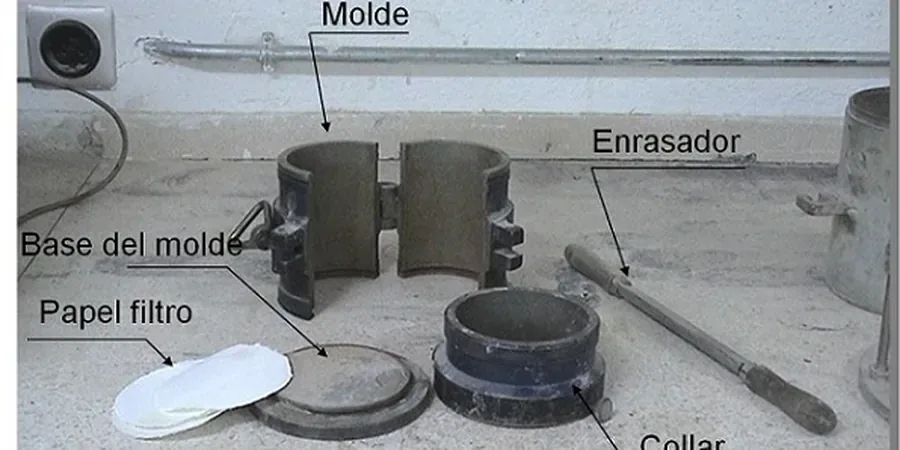
Illustrative image of Proctor test (Standard or Modified) in Sydney
One Proctor curve can prevent years of differential settlement in Sydney's reactive clay fills.
Our service areas

Scope of work

A common oversight among builders in Sydney is assuming one Proctor energy level fits all fill types. Standard Proctor (600 kN·m/m³) suits light compaction for garden beds and shallow fills, while Modified Proctor (2700 kN·m/m³) replicates heavy rollers used on major arterial roads like the M8. The laboratory uses a 4-inch or 6-inch mould, compacts the soil in three to five layers with a specified rammer weight and drop, and plots the dry density curve from four to five moisture points. This data guides field density tests — sand cone or nuclear gauge — to compute percent compaction. For fills near the Nepean River, where moisture varies seasonally, the Modified Proctor combined with ensayo CBR ensures the subgrade meets design strength before pavement placement.
Technical reference — Sydney

Area-specific notes

In Sydney, many times we see site supervisors rely on a single Proctor value from a nearby project rather than testing the actual borrow material. That shortcut backfires when the fill comes from a different geological unit — say, Bringelly Shale instead of Ashfield Shale. The optimum moisture content shifts by 3-5%, and the as-compacted density falls below 95% of the reference. Over a wet season, the fill absorbs moisture and settles unevenly, cracking slabs and pavements. A dedicated Proctor test for each material source, performed by a NATA-accredited laboratory, eliminates that guesswork and keeps the earthworks compliant with AS 3798.

Need a geotechnical assessment?

Reply within 24h.

Email: contact@geotechnicalengineering1.co

Watch how it works

Standards used

AS 1289.5.1.1 (Standard Proctor), AS 1289.5.2.1 (Modified Proctor), AS 1289.5.1.1 (compaction control)

Technical parameters

ParameterTypical value
Mould diameter4 in (101.6 mm) or 6 in (152.4 mm)
Number of layers3 (Standard) / 5 (Modified)
Blows per layer25 (4-in) / 56 (6-in)
Rammer mass5.5 lb (Standard) / 10 lb (Modified)
Drop height12 in (305 mm)
Compaction energy12,400 ft·lbf/ft³ (Standard) / 56,000 ft·lbf/ft³ (Modified)

Quick answers

What is the difference between Standard and Modified Proctor tests?

The main difference lies in compaction energy: Standard Proctor applies 12,400 ft·lbf/ft³ using three layers and a 5.5 lb rammer, while Modified Proctor applies 56,000 ft·lbf/ft³ using five layers and a 10 lb rammer. Modified Proctor produces a higher maximum dry density and lower optimum moisture content, simulating heavier construction rollers used on major projects.

How much does a Proctor test cost in Sydney?

A single Proctor test in Sydney typically costs between AU$160 and AU$340, depending on whether it is Standard or Modified, the number of moisture points, and whether the sample requires drying or crushing. Volume discounts apply for multiple samples from the same project.

Do I need a Proctor test for every fill layer on site?

No. The Proctor test establishes the reference density for a specific soil type. Once the reference curve is defined, field density tests (sand cone or nuclear gauge) are used on each lift to verify that compaction meets the specification, typically 95% to 100% of the Proctor maximum dry density.

Can Proctor test results be used for reactive clay sites in Sydney?

Yes, but caution is needed. Proctor testing on reactive clays from areas like Rouse Hill or Penrith should account for the soil's plasticity and potential expansion. The optimum moisture content from the Proctor curve may not coincide with the moisture level that minimises swelling. For such soils, supplementary atterberg limits and shrinkage tests are recommended alongside the Proctor.

Location and service area

We serve projects across Sydney and its metropolitan area.

View larger map