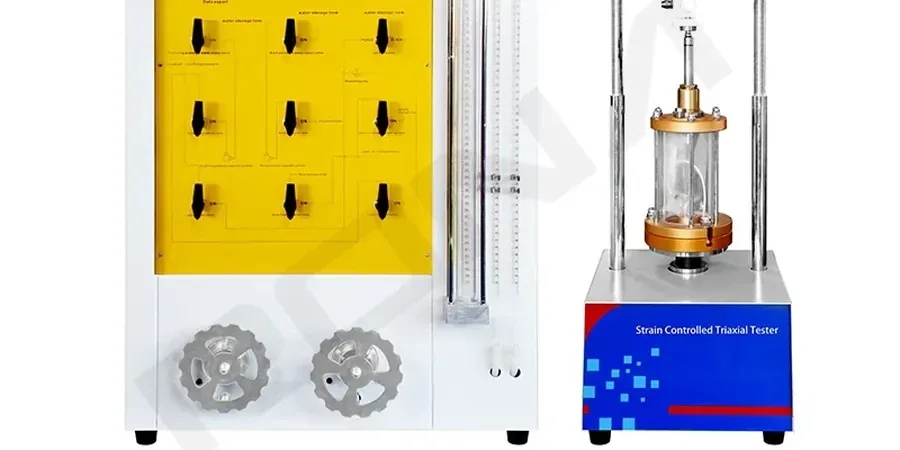
Geotechnical site investigation in Sydney forms the critical foundation of any construction or infrastructure project, encompassing a suite of techniques designed to characterise subsurface conditions and mitigate ground-related risks. This category covers in-situ testing, sampling, and observational methods that reveal soil stratigraphy, rock quality, groundwater levels, and geotechnical design parameters. In a city defined by complex geology—from the Hawkesbury Sandstone of the Sydney Basin to estuarine clays along the Parramatta River—understanding what lies beneath the surface is not merely a regulatory checkbox but an essential safeguard against structural failure, cost overruns, and project delays. Whether you are planning a high-rise in the CBD, a residential slab in the western suburbs, or a retaining wall along a coastal escarpment, a properly scoped investigation programme is the starting point for compliant and durable design.
Sydney's geological setting is dominated by Triassic sedimentary rocks, primarily the Hawkesbury Sandstone and Ashfield Shale, overlain in many areas by Quaternary alluvium, residual soils, and anthropogenic fill. The sandstone, while generally competent, can present challenges such as variable weathering profiles, jointing, and the presence of shale lenses that act as groundwater barriers. In low-lying areas like the Botany Basin or Homebush Bay, thick sequences of soft, compressible clays and loose sands demand careful assessment of settlement and liquefaction potential. The city's dissected topography, with steep gullies and ridgelines, also introduces slope stability concerns that require targeted investigation. A robust investigation strategy must therefore account for this spatial variability, often combining multiple techniques to build a reliable ground model.
Australian Standard AS 1726-2017 'Geotechnical Site Investigations' provides the overarching framework for planning and executing investigations in Sydney, outlining requirements for desk studies, field work, and reporting. This standard is complemented by the National Construction Code (NCC) and local council development control plans, which often mandate minimum investigation depths and borehole counts based on building footprint and load intensity. For example, a standard residential development may require exploratory test pits to expose shallow strata, while multi-storey structures typically call for deeper rotary drilling and in-situ testing. Adherence to these standards ensures that investigation data is defensible, comparable, and suitable for use in limit state design as per AS 5100.3 for bridges or AS 2159 for piling.
The types of projects that require comprehensive investigation in Sydney span the full spectrum of civil and structural engineering. High-density residential towers in Green Square rely on CPT (Cone Penetration Testing) to rapidly profile soft soils and estimate pile capacities, while industrial developments on the Cumberland Plain often incorporate SPT (Standard Penetration Testing) during borehole drilling to sample and test residual soils. Infrastructure projects such as the WestConnex tunnels or Sydney Metro stations demand extensive investigation to assess rock mass properties, abrasivity, and groundwater inflows. Even smaller-scale works like swimming pools, basement excavations, and slope stabilisation benefit from a targeted combination of exploratory test pits and dynamic penetrometer tests to validate assumptions and comply with SafeWork NSW excavation requirements.
A typical investigation begins with a desktop study of geological maps and historical data, followed by field work that may include borehole drilling, in-situ tests such as CPT or SPT, and laboratory analysis of recovered samples. The scope is tailored to the site's geology and the project's scale, with findings compiled into a geotechnical report that provides design parameters, foundation recommendations, and risk assessments.
Investigation depth depends on the foundation type and applied loads, but AS 1726-2017 generally recommends boreholes extending to at least 1.5 times the building width below the deepest foundation influence zone. For high-rise structures on piles socketed into sandstone, this often means depths exceeding 20 metres, with some probes continuing until competent rock is proven over a sufficient length.
CPT involves pushing an instrumented cone into the ground at a constant rate to continuously measure tip resistance and sleeve friction, providing high-resolution soil profiles ideal for soft soils and liquefaction analysis. SPT is conducted within a borehole by driving a split-spoon sampler with a standardised hammer, allowing soil sample recovery and direct blow count correlation. CPT is faster and more repeatable, while SPT excels in dense or gravelly soils where CPT refusal may occur.
Yes, most local councils in Sydney require a geotechnical report as part of the development application for new dwellings, particularly where site classification under AS 2870 is needed for slab design. Even for minor structures, a basic investigation using exploratory pits or hand augers is often necessary to satisfy structural engineers and building certifiers that foundation conditions are adequate.
We serve projects across Sydney and surrounding areas.