SYDNY
SYDNEY
HomeFoundationsFoundations on Fill Analysis

Foundations on Fill Analysis in Sydney – Geotechnical Approach

Rigorous testing. Clear reporting.

LEARN MORE

In Sydney, we often encounter sites where natural soil profiles have been buried under variable fill layers, especially around former industrial zones near the harbour and reclaimed areas like Pyrmont. The challenge with foundations on fill analysis here is that the fill can range from well-compacted sandstone rubble to loose demolition debris mixed with clay, and its behaviour under load is rarely uniform. Before any footing design proceeds, we insist on a thorough investigation that includes test pits and boreholes to map fill thickness and composition. For deeper fills, we recommend combining this with a [MASW survey](/masw-vs30/) to detect stiffness contrasts across the site. Only with this data can we provide reliable bearing capacity estimates and settlement predictions for the project.
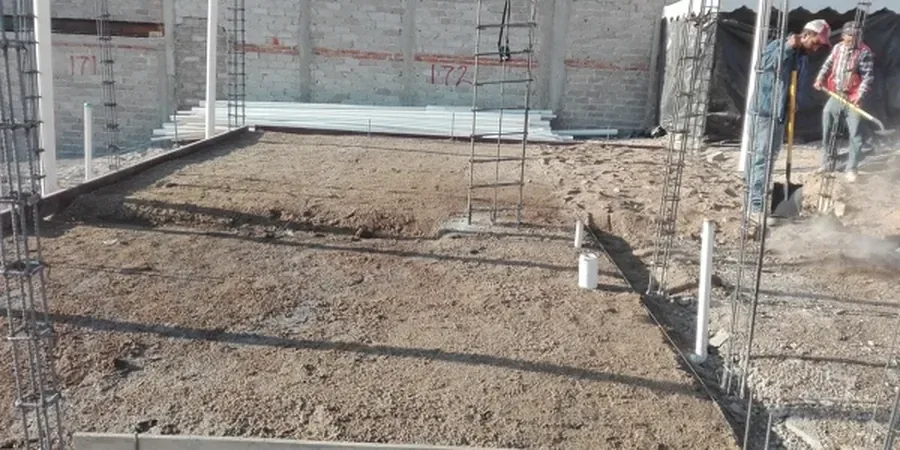
Illustrative image of Foundations on fill (analysis) in Sydney
Uncontrolled fill in Sydney can settle unevenly for decades; a proper analysis identifies the risk before foundation loads are applied.

Our service areas

Scope of work

Sydney's urban expansion over the past century has pushed development onto terrain that was once tidal flats, quarries, or waste landfills. The 1900s saw extensive filling of the shoreline at places like Rozelle Bay and Homebush, creating thick zones of uncontrolled fill that now support roads, parks, and even low-rise buildings. When we analyse foundations on fill at such sites, we assess three key parameters: fill type and compaction level, depth to natural ground, and potential for long-term creep settlement. We also run laboratory tests for moisture content and organic content, because even a small percentage of decomposable material in the fill can trigger differential movement years after construction. Our approach follows the principles of AS 1726 for subsurface investigation and AS 4678 for earth retaining structures adjacent to fill slopes.
Technical reference — Sydney

Area-specific notes

Sydney's climate, with its intense summer storms and occasional drought cycles, directly affects fill behaviour. A period of heavy rain can raise the water table within fill layers, reducing effective stress and triggering collapse settlement in poorly compacted materials. Conversely, prolonged dry spells cause clayey fills to shrink and crack, altering their load transfer mechanism. The biggest risk we see is differential settlement between building zones that sit partly on fill and partly on natural stiff clay or sandstone. That mismatch can crack slabs, jam doors, and compromise structural integrity. A rigorous foundations on fill analysis must therefore include seasonal moisture variation scenarios in the settlement calculations.

Need a geotechnical assessment?

Reply within 24h.

Email: contact@geotechnicalengineering1.co

Standards used

AS 1726-2017 Geotechnical site investigations, AS 4678-2002 Earth-retaining structures, NCEER 1997 guidelines for liquefaction assessment in fills

Technical parameters

ParameterTypical value
Fill thickness range0.5 m to 8 m (typical in Sydney reclamation areas)
SPT N-value in fill4 to 18 blows/300mm (loose to medium dense)
Estimated total settlement (shallow footing)25 mm to 80 mm under 150 kPa load
Differential settlement riskModerate to high in heterogeneous fill
Groundwater depth1.5 m to 4 m BGL in low-lying fill zones

Quick answers

What is the typical cost for a foundations on fill analysis in Sydney?

For a standard residential site with 4 to 6 boreholes and laboratory testing, the cost ranges between AU$1,220 and AU$3,770. Larger commercial sites with deeper fill may exceed this range depending on access and testing scope.

How deep should I investigate fill before building a house in Sydney?

We recommend investigating to at least 1.5 times the width of the proposed footing, or until natural ground is encountered. In many Sydney suburbs, fill depths of 2 to 5 metres are common, so boreholes of 6 to 10 metres are often necessary.

Can I build directly on fill without ground improvement?

In Sydney, it is rarely advisable to place shallow footings directly on uncontrolled fill without improvement. The variability in compaction and composition usually leads to unacceptable differential settlement. A proper analysis will tell you if improvement is needed or if deep foundations are the safer option.

What tests are used to characterise fill material for foundation design?

We routinely perform SPT, pocket penetrometer tests, moisture content, Atterberg limits, and particle size distribution. For deeper fills, we also use CPTu or MASW to map stiffness variations across the site.

Location and service area

We serve projects across Sydney and its metropolitan area.

View larger map